Rafting on the Tara — From Logs to Rubber Boats
Every sport has its beginning. Some are born out of boredom, some out of a competitive spirit, some out of the need to prove yourself to yourself or to others. Rafting on the Tara was born from none of those things. It was born from work — hard, dangerous work, carried out by men who knew the canyon of the Tara better than their own homes.
The Triftars — The Men Who Tamed the River
Towards the end of the 19th century, the Austro-Hungarian authorities organised the transport of timber down the Tara — first along the right bank of the river, then along its entire length all the way from Mojkovac. The workers who carried out this hard and dangerous job were called triftars.
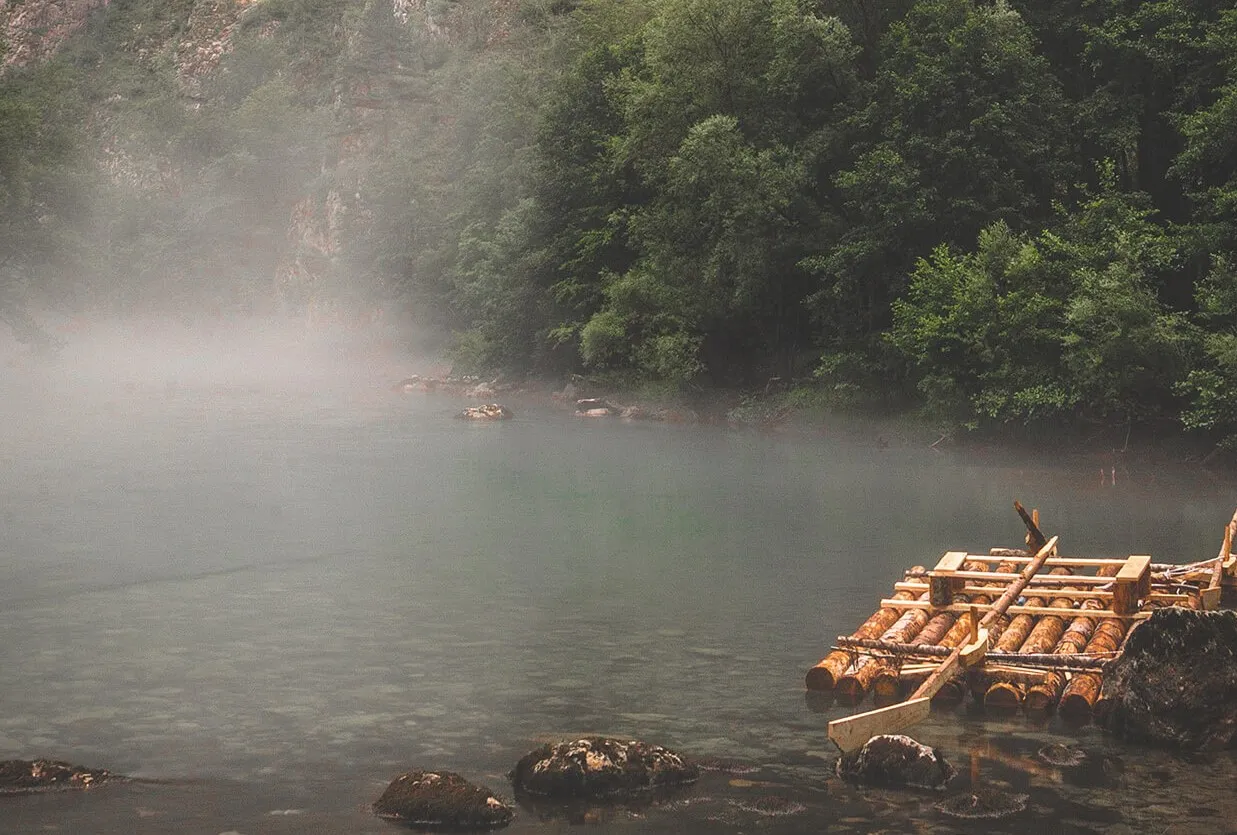
The work looked like this: trees felled on the steep slopes of the canyon were pushed directly into the river. Logs were carefully laid out and bound together with steel cables and iron clamps to form rafts, which only the most courageous and skilled individuals then steered down the Tara and Drina — all the way to the sawmills in Foča and Višegrad, and even as far as Belgrade. At the rear of each such convoy of timber-laden rafts floated a raft known as the Hodarica, whose job was to push along any logs that had fallen behind.
The rafts had a wooden rudder at the front, which a powerful triftar used to steer the vessel through the rapids and falls of the Tara and Drina. It was not uncommon for the river's ferocity to wedge a raft between rocky outcrops, or for the force of the current to break it apart entirely. The profession was highly respected and well paid, but it came with enormous risk. Many of the rapids and stretches of the river still carry the names of famous triftars today — a reminder of their fate and the gruelling life they led. The river remembered everyone it claimed, and preserved their memory in the roar of the rapids that still echo through the canyon.
An Austrian Engineer and the First Tourist Raft
Records held in the Foča Museum note that as far back as 1906, a local triftar from Foča carried an Austrian forestry engineer by wooden raft along the Drina from Šćepan Polje to Foča — purely for rest and recreation. That year could reasonably be taken as the very beginning of tourist rafting in this part of the world.
Picture the scene: an Austrian official in a suit sitting on a raft made of tree trunks, surrounded by a gorge rising hundreds of metres on either side, while a weathered triftar skilfully navigates him through rapids that seasoned soldiers would have thought twice about approaching. Who could have known that this moment would set in motion an entire industry that, a hundred years later, would draw tens of thousands of visitors from across the world every single season.
The Pendek Family — Four Generations on the Water
No story about rafting on the Tara is complete without the Pendek family. Great-grandfather Sulejman began transporting passengers by raft as early as 1905, ferrying wealthy Austrians who came to oversee the timber cutting, while indulging in the charms of these mountain rivers and enjoying hunting and fishing along the way. Grandfather Selim carried on that tradition through the 1930s, and father Adem followed the same path from 1946, becoming the first professional raft guide on the river.
Among all the so-called "Drina wolves", the most celebrated triftar right up until the 1990s was Adem Pendek himself — a man around whom countless stories and legends gathered over the years. Today his son Fikret runs an association named after his father and continues the same work on the same river — the fourth generation of a family that has refused to leave the Tara for more than 120 years.
War, Silence and a New Beginning
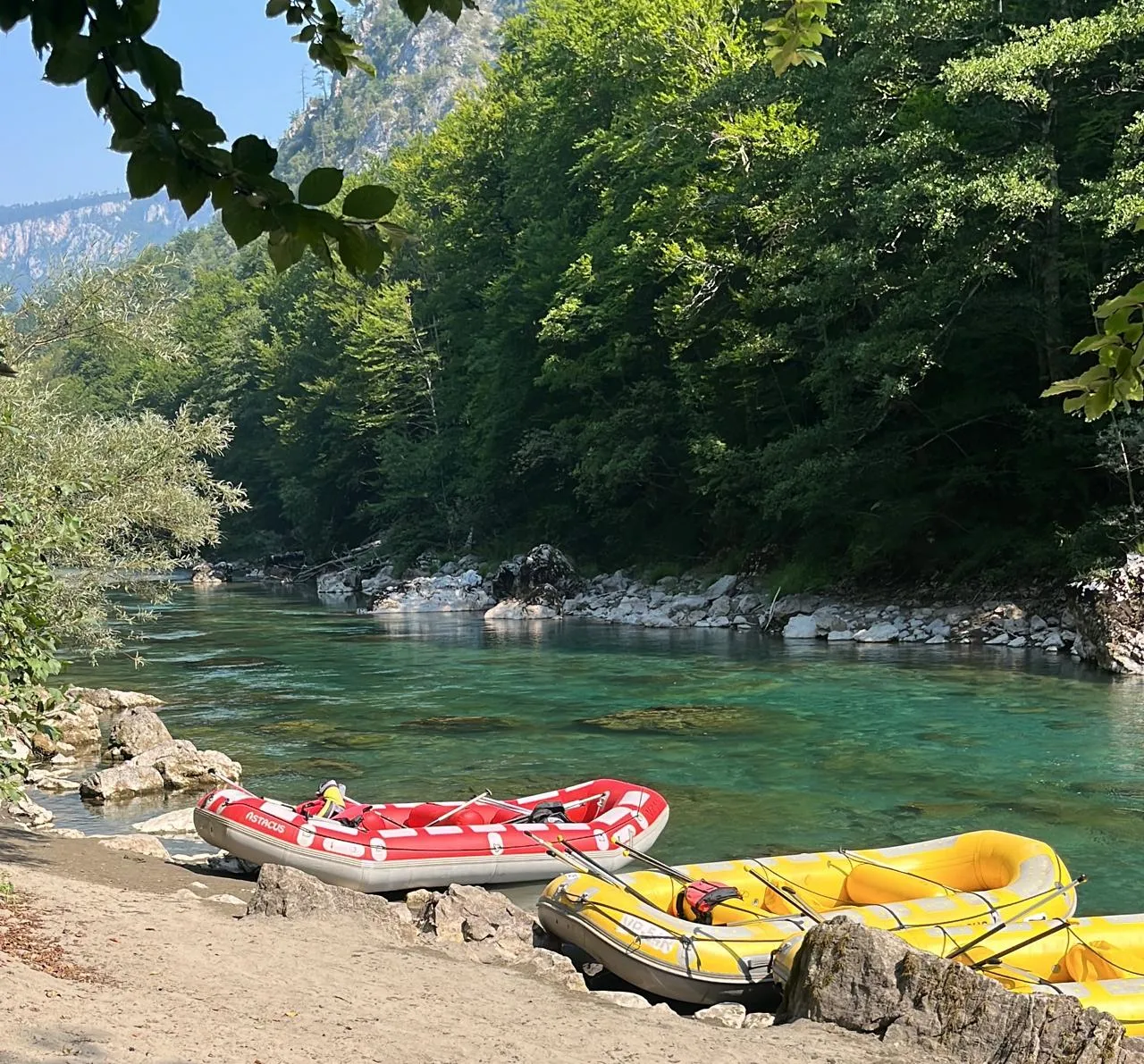
The Second World War brought trifting to a halt, until 1958, when the Tourist Organisation of Foča was founded. The triftars then began taking tourists onto their rafts — people seeking rest and the beauty of the river. Over time, the wooden frames gave way to rubber boats, and neoprene suits and helmets replaced whatever improvised gear the early pioneers had made do with.
Then came the nineties. The war stopped everything. A handful of enthusiasts timidly began to revive rafting in 1996. At a place called Bastasi, six kilometres downstream along the Drina from Šćepan Polje, in the wild undergrowth on the right bank of the river, the first tents and wooden shelters appeared. No advertising, no infrastructure, no guarantee that anyone would come — just the river, a boat, and the belief that something worth saving deserved to be saved.
From Canvas Tents to a World Championship
From those first tents, something nobody could have predicted began to grow. Rafting on the Tara today carries the title of one of the most challenging and spectacular in the world — alongside the Colorado and the Zambezi. The difficulty of the sections ranges from the third to the fifth degree, depending on the season and the water level. In May, when the falls are at their loudest and the water at its fastest, the river becomes something entirely different from the calm summer Tara where people swim and leap from the rocks.
In 2009, the canyon of the Tara hosted the Rafting World Championship. A river that began as a road for logs had become a stage for the best rafters on the planet. The triftars would have been proud.