Ljubišnja: The Mountain That Guards Secrets, Legends and 77 Springs
The northwest of Montenegro hides one of its most beautiful and least discovered gems — the mountain of Ljubišnja. Tall, wild, unreachable for much of the year, and for exactly that reason — perfect.
A Mountain Visible from Everywhere, Yet Hard to Reach
Some mountains greet you from every horizon. Ljubišnja is one of them. If you have ever driven towards Pljevlja, or stood on one of Durmitor's ridges, you have probably seen it — but perhaps didn't know you were looking at it.
Nestled in the far northwest of Montenegro, between the rivers Tara and Ćehotina, Ljubišnja stretches across 51 km² and reaches all the way to the border with Bosnia and Herzegovina. Its highest peak — Dernečište (Dernjačišta) — rises to 2,238 metres above sea level, while the lowest point sits at just 600 metres, in the valley of the village of Bobovo, wedged between the canyons of the Tara and the Draga rivers.
That difference of nearly 1,600 metres is not just a statistical curiosity — it is an entire ecosystem stacked vertically.
A Legend That Explains Everything
Every great mountain has its story. Ljubišnja has a legend worthy of a screenplay.
The tale goes that the medieval Bosnian-Herzegovinian ruler Stjepan Kosača travelled to Venice to bring back a bride for his son. On the return journey, the caravan was forced to spend the night on the mountain. During the night, a gust of wind lifted the veil from the future bride's face — and Kosača, beholding her beauty, lost both his mind and his heart in an instant.
His son found him in the tent with her next morning. Humiliated and furious, the son defected to the Ottomans and fled his father.
The mountain has carried the name of that story ever since: Ljubišnja — from "ljubi snahu" — he kisses the daughter-in-law.
77 Springs: A Mountain That Sings
A folk song claims that Ljubišnja has exactly 77 springs of fresh water. The count is hard to verify, but easy to believe — the mountain is genuinely richer in springs and water sources than most of its neighbours.
This is no coincidence. Ljubišnja is blanketed in both coniferous and deciduous forest — fir and spruce forests at lower elevations, dwarf pine and alpenrose higher up — all of which retain moisture and feed underground streams. The mountain is also home to numerous endemic and medicinal plants, and the alpenrose has become something of an emblem for the highland villages on its plateau.
For hikers, this means something practical and precious: there is water on the trail from Trišova Poljana to the summit — not something you can take for granted on every Montenegrin peak.
Draga Canyon: Europe's Record-Holder in the Shadow of the Tara
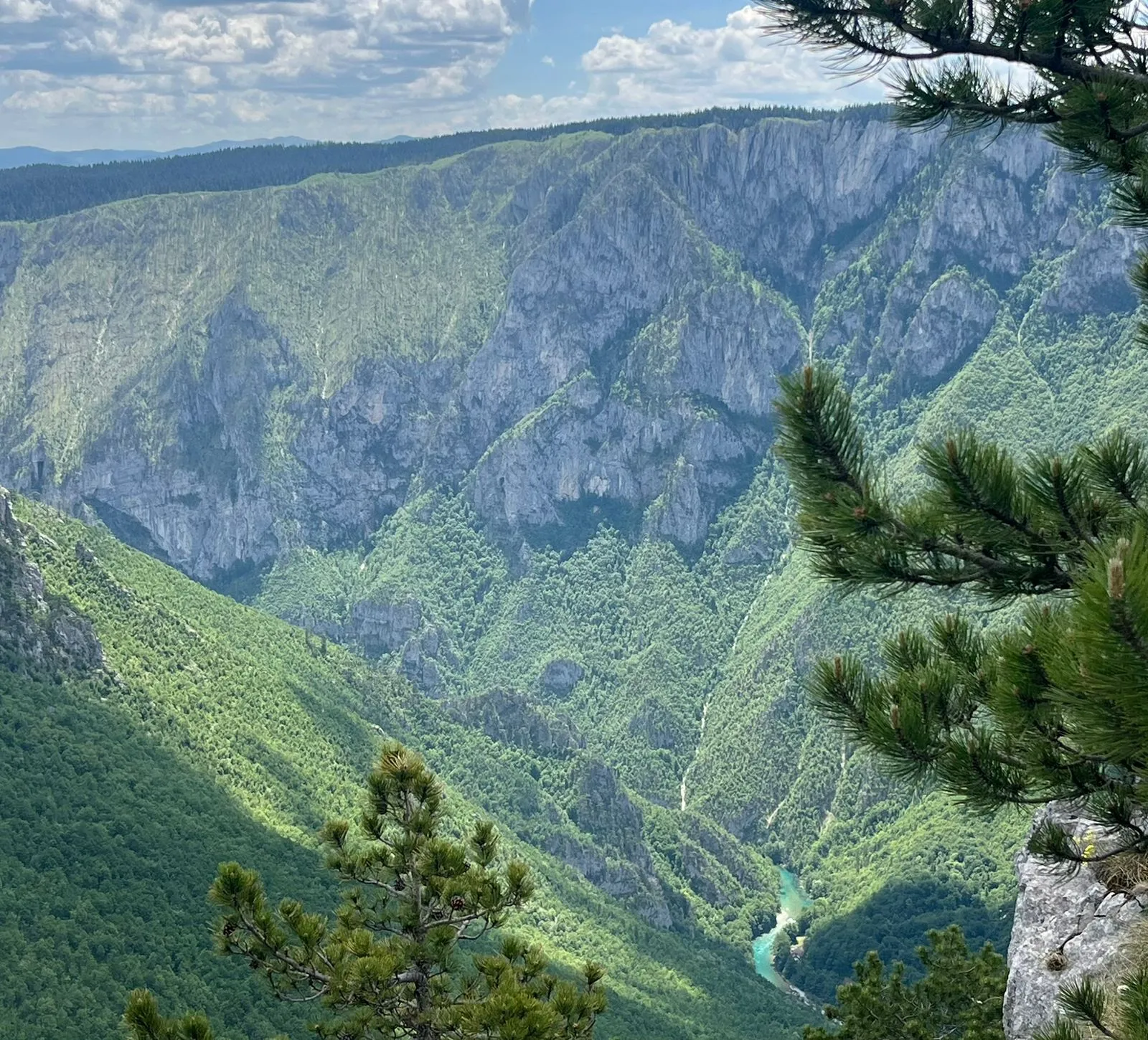
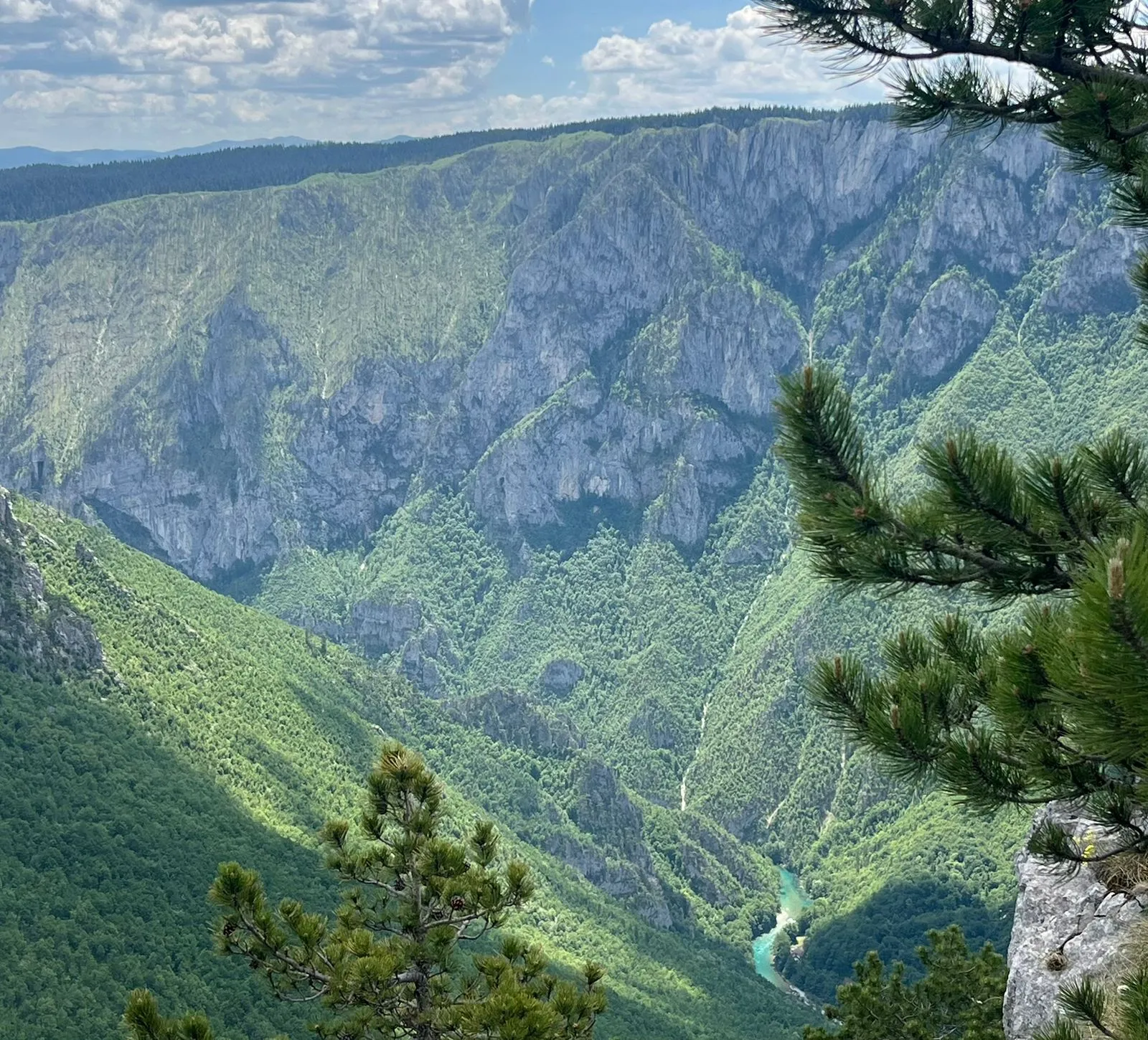
Ljubišnja is not just a summit. Beneath it, the river Draga has carved one of the most dramatic canyons on the continent.
At a place called Tijesno — which translates simply as "The Narrows" — the canyon is barely ten metres wide, yet plunges more than 600 metres deep. This makes it the second deepest canyon in Europe, right behind the famous canyon of the Tara river.
And while the Tara canyon draws millions of visitors each year, the Draga canyon remains almost entirely unknown. No tourist signs, no car parks, no organised tours. Just a narrow slash in the rock and the roar of the river far below.
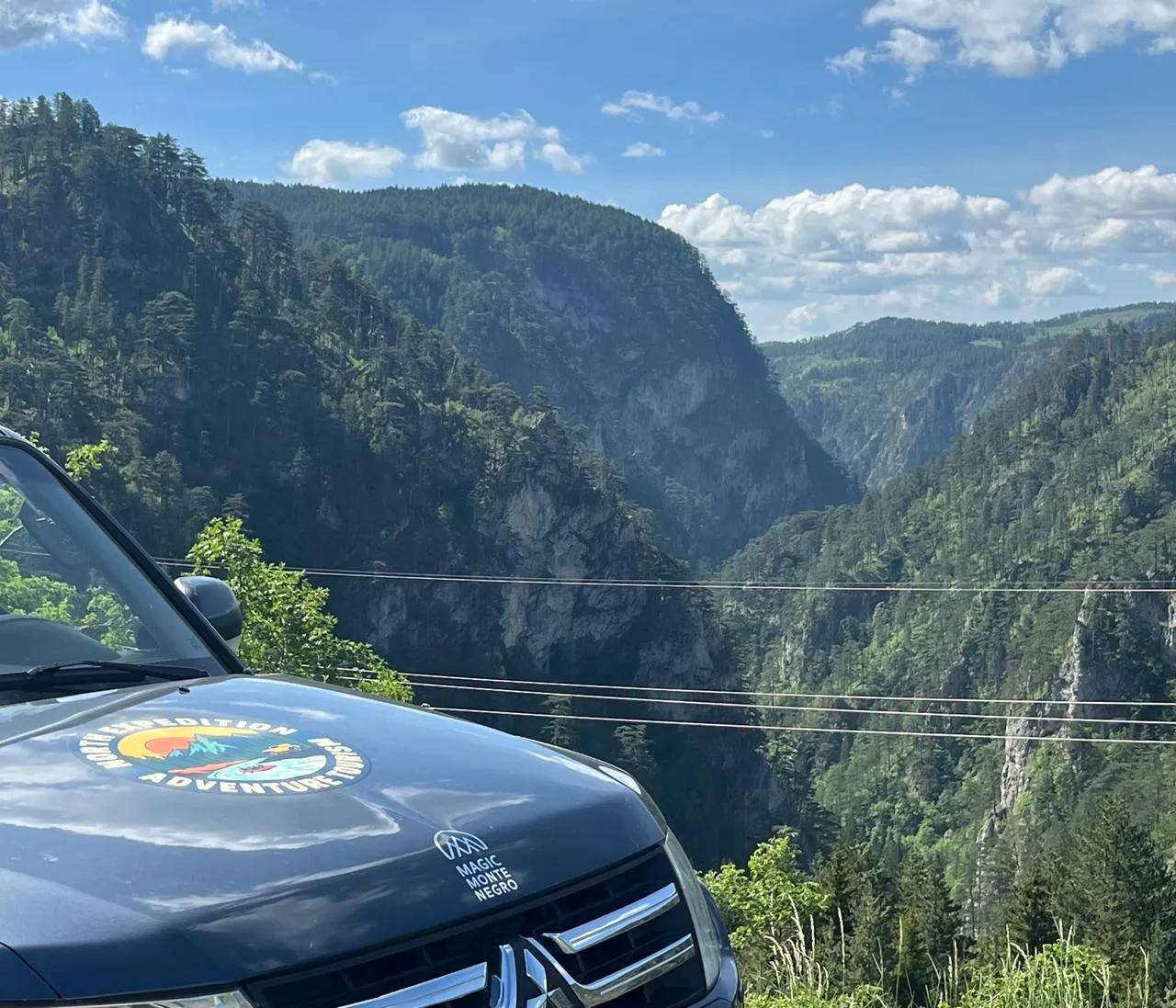
The View from the Top: When Nature Becomes a Stage
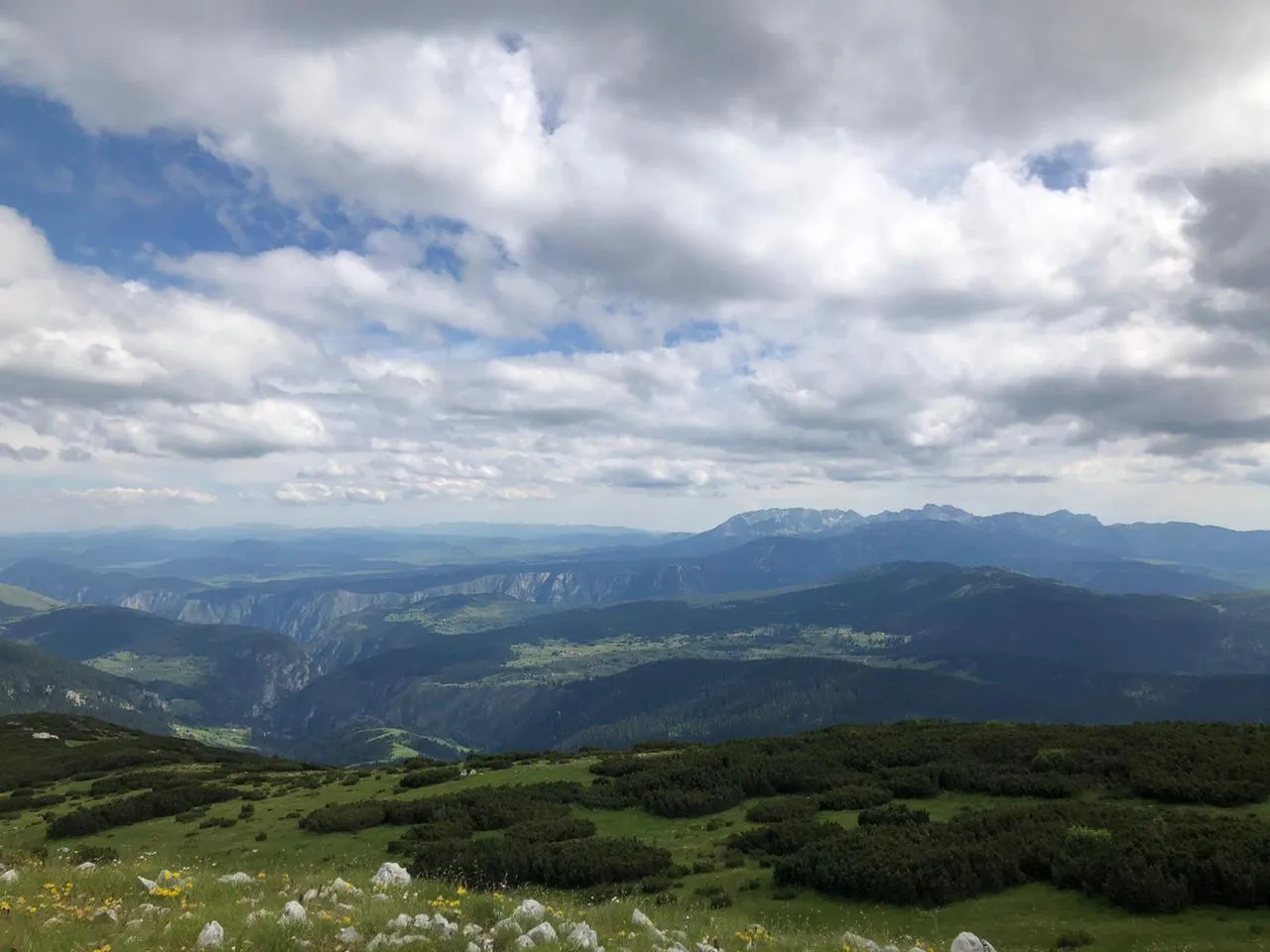
From Dernečište, on a clear day, you are treated to one of the finest panoramas in northern Montenegro. On the horizon you can make out:
- Durmitor to the south
- Sinjajevina and Bjelasica in the distance
- Volujak and Maglić to the east
- The Tara canyon to the southwest
- Parts of Bosnia and Herzegovina to the west
A hiker doesn't ask for much — just a clear day and a little luck with the weather. Ljubišnja knows how to reward both.
Why Ljubišnja Is Still a Secret
In an era when every beautiful corner of the planet is packaged for social media and turned into an Instagram destination, Ljubišnja remains untouched. No hotels, no guided tour packages, no café at the top.
There are wild animals in its forests, which means solo hikes are not recommended. There are forest tracks that confuse even navigation apps. There is weather that can shift dramatically within an hour.
And there is a particular kind of silence — the kind you only hear when you are truly far from everything.
That is precisely why mountaineers who visit Ljubišnja once speak of it with a certain reverence. Not as a tourist experience — but as an encounter.
A Final Word
Montenegro is often described as a land of wild beauty. Ljubišnja is proof that this is not a marketing slogan.
A mountain named after a forbidden love, guarding 77 springs and Europe's second deepest canyon, yet virtually unknown to most visitors of this country — that is Ljubišnja.
Perhaps that is its greatest charm of all.